
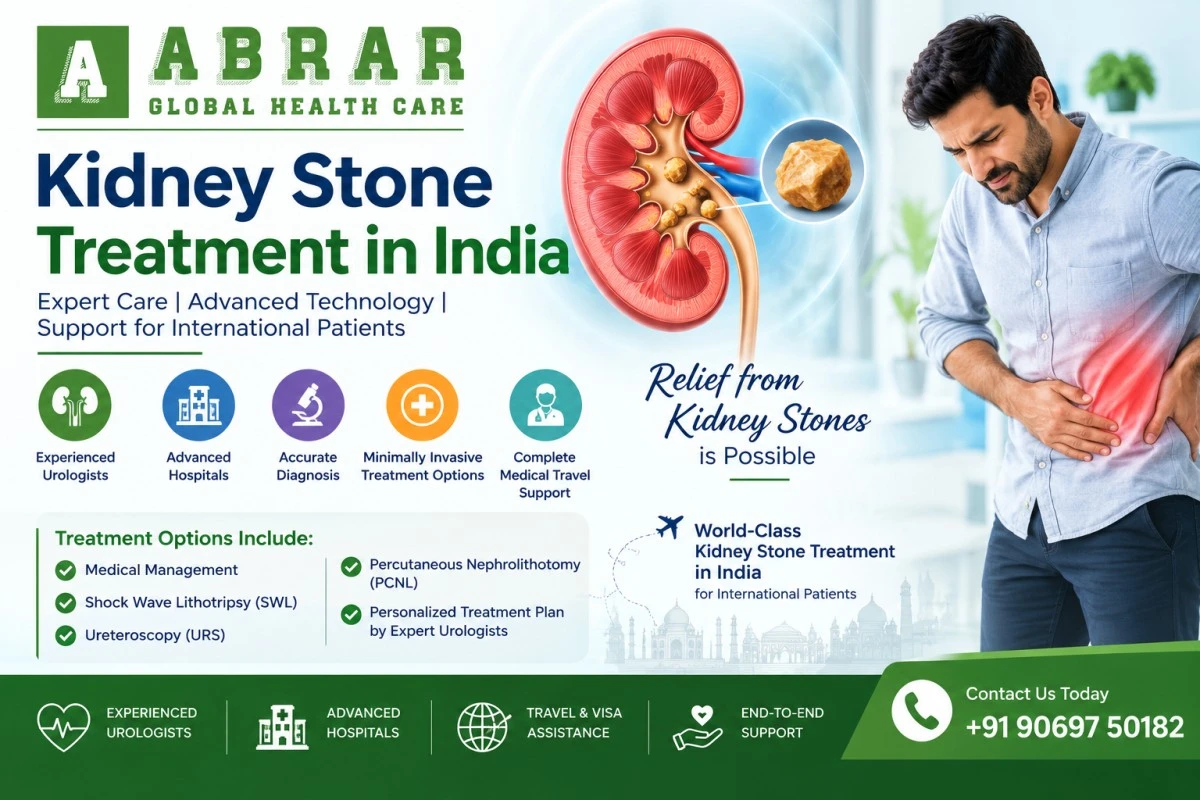
Kidney stones are a common urological condition that can cause significant pain and urinary problems. Depending on the size, location and type of stone, treatment may range from observation and medication to procedures that remove or break the stone.
For international patients considering kidney stone treatment in India, finding an experienced urologist and an appropriate hospital is an important part of the treatment journey.
Abrar Global Healthcare helps international patients coordinate consultations, hospital appointments and medical travel arrangements in India.
What Are Kidney Stones?
Kidney stones are hard deposits that form inside the kidneys when certain substances in the urine become highly concentrated and crystallize.
Their size can vary considerably. Some small stones may pass naturally, while larger or obstructing stones may require medical intervention.
Common Symptoms of Kidney Stones
Symptoms can vary depending on the stone’s size and location. Common symptoms may include:
- Severe pain in the side or back
- Pain that may move toward the lower abdomen or groin
- Pain or burning while urinating
- Blood in the urine
- Frequent urge to urinate
- Nausea or vomiting
- Difficulty passing urine
Anyone experiencing severe or persistent symptoms should seek medical evaluation.
How Are Kidney Stones Diagnosed?
A urologist may use a combination of medical history, physical examination and diagnostic tests to evaluate kidney stones.
Depending on the patient’s condition, investigations may include:
- Urine tests
- Blood tests
- Ultrasound
- X-ray
- CT scan
- Other imaging examinations
The appropriate tests are determined by the treating medical team.
Kidney Stone Treatment Options in India
Treatment depends on factors such as stone size, location, symptoms and the patient’s overall health.
1. Medical Management
Small stones may sometimes pass naturally. A doctor may recommend fluids, pain management or medication depending on the individual case.
2. Shock Wave Treatment
Certain stones may be treated using shock waves to break them into smaller fragments so they can pass through the urinary tract.
3. Ureteroscopy
During ureteroscopy, a specialist uses a small instrument to access the urinary tract and treat or remove the stone.
4. Percutaneous Procedures
For some larger or complex kidney stones, a minimally invasive procedure through the skin may be considered.
The appropriate treatment should always be determined by a qualified urologist after reviewing the patient’s medical condition and diagnostic reports.
Why Choose India for Kidney Stone Treatment?
International patients may consider India because of the availability of experienced urologists, specialized hospitals and modern diagnostic and treatment facilities.
Treatment options and costs can vary depending on the hospital, procedure, stone characteristics and individual patient requirements. A personalized medical assessment is therefore important before making treatment decisions.
How Abrar Global Healthcare Can Help
Travelling internationally for medical treatment requires coordination beyond the hospital appointment.
Abrar Global Healthcare can assist international patients with:
- Urologist and hospital coordination
- Medical report sharing
- Consultation scheduling
- Treatment coordination
- Travel assistance
- Visa-related guidance
- Accommodation coordination
- Airport and local transportation assistance
- Follow-up coordination
Our goal is to make the medical travel process easier for patients and their families.
Start Your Kidney Stone Treatment Journey in India
If you are considering kidney stone treatment in India, you can begin by sharing your previous medical reports and diagnostic scans.
A qualified urologist can review your case and recommend the appropriate diagnostic and treatment approach.
Contact Abrar Global Healthcare at +91 90697 50182 to discuss your medical treatment requirements in India.
Disclaimer: This article is intended for general educational purposes and does not constitute medical advice. Treatment decisions should be made after consultation with a qualified healthcare professional.